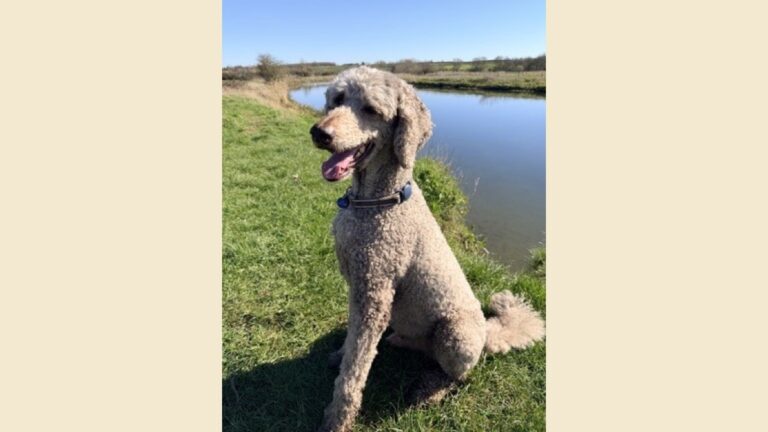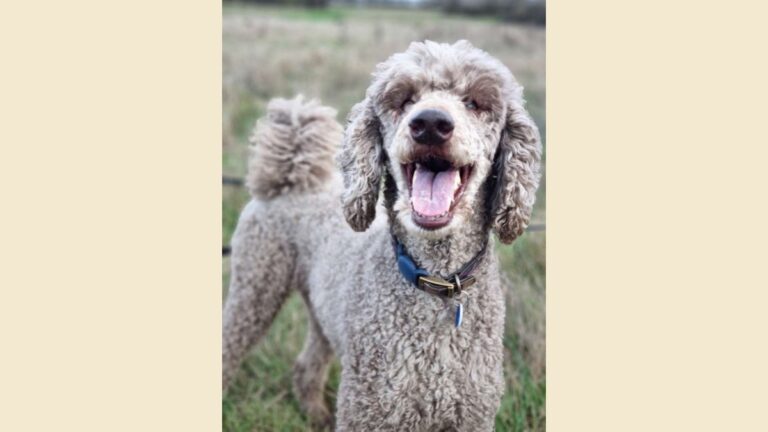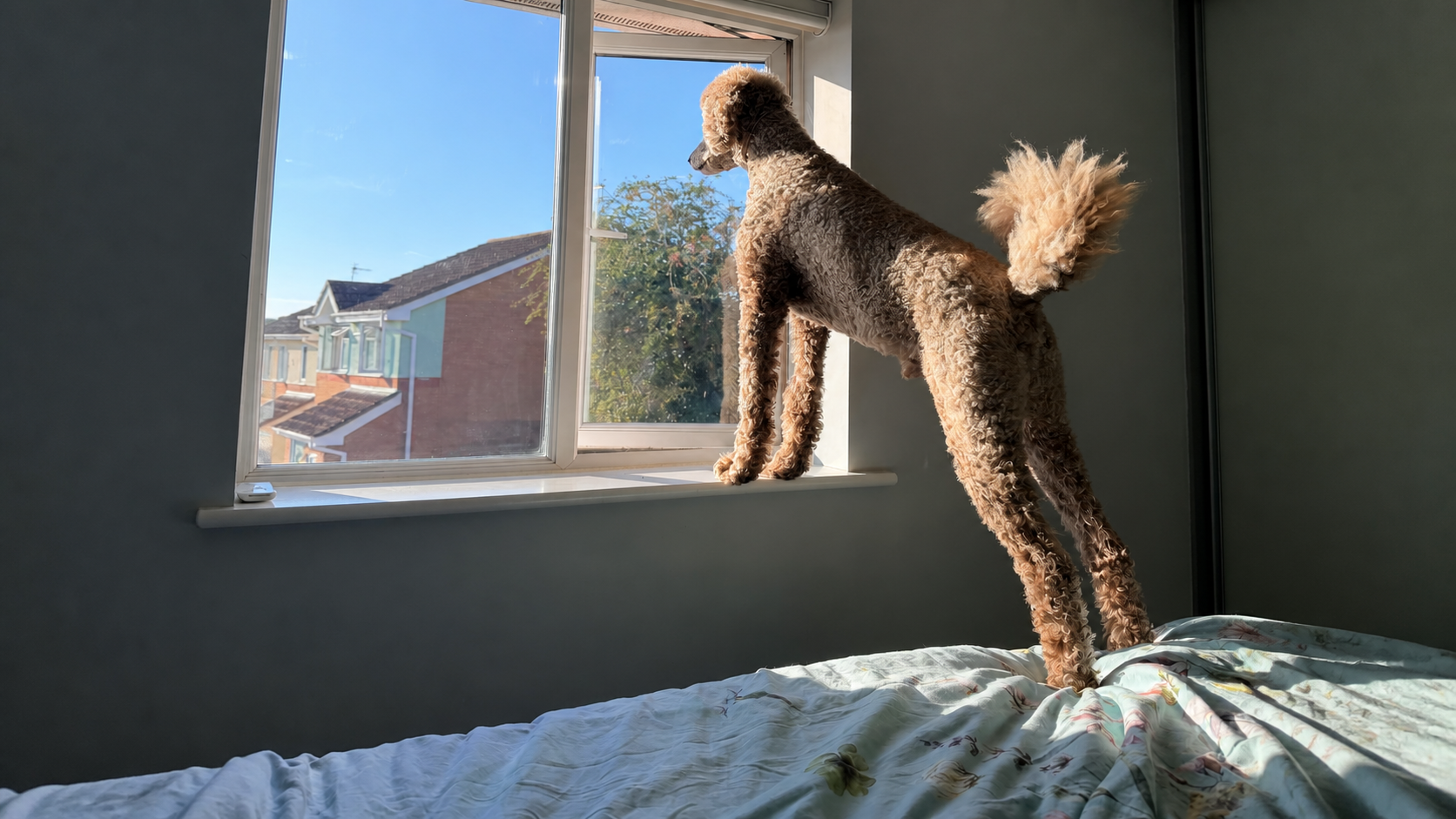
One Grass Seed. One Very Sore Paw. One Unexpected Operation.
Sometimes the smallest foreign object causes the biggest repair.
In Oliver's case, it was a grass seed.
I had not seen it because there was nothing obvious to see. Until Bryony noticed that Oliver's paw was not right, I did not even know it was there.
For something so small, it caused a remarkable amount of trouble. One tiny grass seed managed to take a 29 kg Standard Poodle temporarily out of service, produce a bill for hundreds of pounds and earn itself a permanent place Sellotaped to a veterinary business card.
Not bad going for something with no moving parts.
A routine six-week service
Oliver is my Standard Poodle and, like any self-respecting poodle, receives rather more attention at the hairdresser than I do.
Every six weeks he goes to Bryony at Barker & Barnet for a full groom. She knows him well, understands his temperament and is familiar with what is normal for him. I am very happy to recommend her.
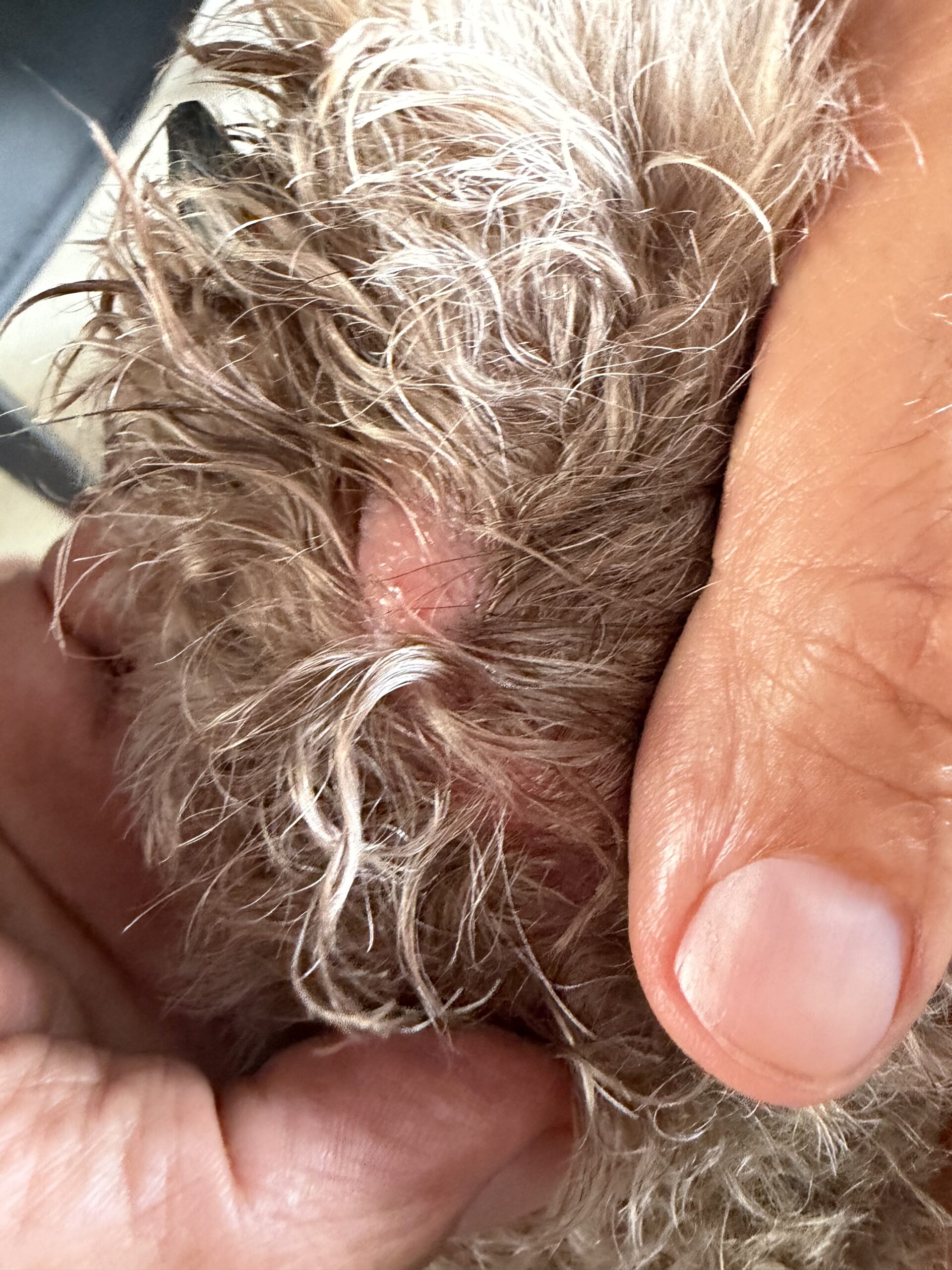
On Friday 10 July 2026, Bryony noticed that the top of Oliver's left front paw was inflamed and swollen.
Looking back, Oliver had occasionally licked the paw and limped once or twice. I had checked it, but a Standard Poodle arrives with a substantial quantity of fur fitted as standard. I could not see anything underneath it.
Only once the coat was wet and clipped shorter did the pink, inflamed skin become much easier to see.
There was no obvious wound. No grass seed sticking out. Nothing helpfully labelled REMOVE THIS FIRST.
Just a paw that did not look right.
And I had not noticed it.
What looked like an advisory became a strip-down job
Once Oliver's groom was finished, I phoned Swanspool Veterinary Clinic in Wellingborough, another place I am very happy to recommend. They arranged to see him that same day.
I expected the usual sort of visit: inspect the paw, perhaps prescribe some medication, then Oliver and I would head home.
That was the plan, right up until the plan met the actual fault.
After examining him, the vet suspected that a grass seed had penetrated the paw. There was nothing visible to grasp, so Oliver would need to be sedated while they investigated properly.
The vet explained that it needed dealing with straight away and outlined the risks of leaving it in place. So, instead of bringing Oliver home after the appointment, I left him in their care and drove home without him.
It is surprising how quickly your thoughts change from, "We are just popping to the vet," to worrying because you have left your dog behind for a procedure.
Once Oliver was sedated, the vet made a small incision, found the grass seed and removed it.
Thankfully, a few hours later, I received the call I wanted. The procedure had gone well and the grass seed was out.
More worrying was how far it had already travelled from where it entered. The vet explained that it had worked its way a few inches up from the original entry point.
We had been fortunate to catch it when we did.
Six in two days
The vet then mentioned something that put the whole episode into perspective. Oliver was apparently the sixth grass-seed removal they had dealt with in only two days.
These insignificant-looking things are not always harmless passengers caught in a dog's coat. Their pointed, barbed shape can help them work forwards through fur and into the skin. Once underneath, they may continue travelling while leaving very little to see outside.
Paws are not the only place they can cause trouble. Grass seeds can become caught around a dog's ears, eyes and nose, as well as between the toes and elsewhere on the body. A longer-coated dog like Oliver comes with rather more built-in storage compartments than most.
The awkward part is that there may be no dashboard warning light. Sometimes the first sign is simply that something is not normal.
Zeus had already issued this warning
This was not my first encounter with a troublesome grass seed.
When I was in my teens, our family had a Doberman called Zeus. A swelling appeared in his neck and seemed to grow almost minute by minute. Again, nothing visible on the outside explained what was happening.
Zeus needed emergency surgery. The culprit was another grass seed.
More than forty years apart, two completely different dogs taught me essentially the same lesson.
With Zeus, it produced a rapidly growing swelling in his neck. With Oliver, there was nothing dramatic, only an inflamed area on the top of his paw that Bryony noticed during his groom.
Neither dog came with a convenient arrow pointing at the fault. The problem was hidden beneath the surface.
I have had enough experience to know that small symptoms should not automatically be treated as small problems. Even so, Oliver had managed to conceal the evidence beneath enough fur to defeat a reasonably determined inspection.
Regrettably, I no longer have a photograph of Zeus. Plenty were taken, but this was long before digital photography. The original prints passed between members of the family over the years and have since been lost.
That provides another lesson worth preserving: if old family photographs matter, scan them while you still know where they are. A digital backup is not sentimental, but neither is discovering that the only surviving copy has disappeared.
Temporarily off the road
Oliver was ready to collect at around six o'clock that evening.
"Ready" may be overstating it.
He was extremely drowsy after the sedation and definitely not his usual bouncy self. The engine was running, but the steering remained questionable and his roadworthiness certificate had been temporarily withdrawn.
The important thing was that the grass seed was out and he could come home. He was sent back with painkillers and antibiotics for five days while his paw settled down and healed.
The incision did not require stitches and Oliver escaped the cone of shame. He did want to lick the paw occasionally, but he is very good when told to leave or stop. At night, when supervisory control was unavailable because I needed some sleep, I put a sock over his foot.
It was not sophisticated medical equipment, but it passed the practical test: it stayed on, prevented interference and cost considerably less than the rest of the day's activities.
By the following day, Oliver was almost back to normal. No follow-up appointment was necessary, although the shaved fur took several weeks to grow back. The temporary bald patch did little for his street credibility, but he carried it with the quiet dignity expected of a Standard Poodle whose medical records were considerably less tidy than his haircut.
Content note: The following photograph was taken immediately after the procedure and shows Oliver's open incision.
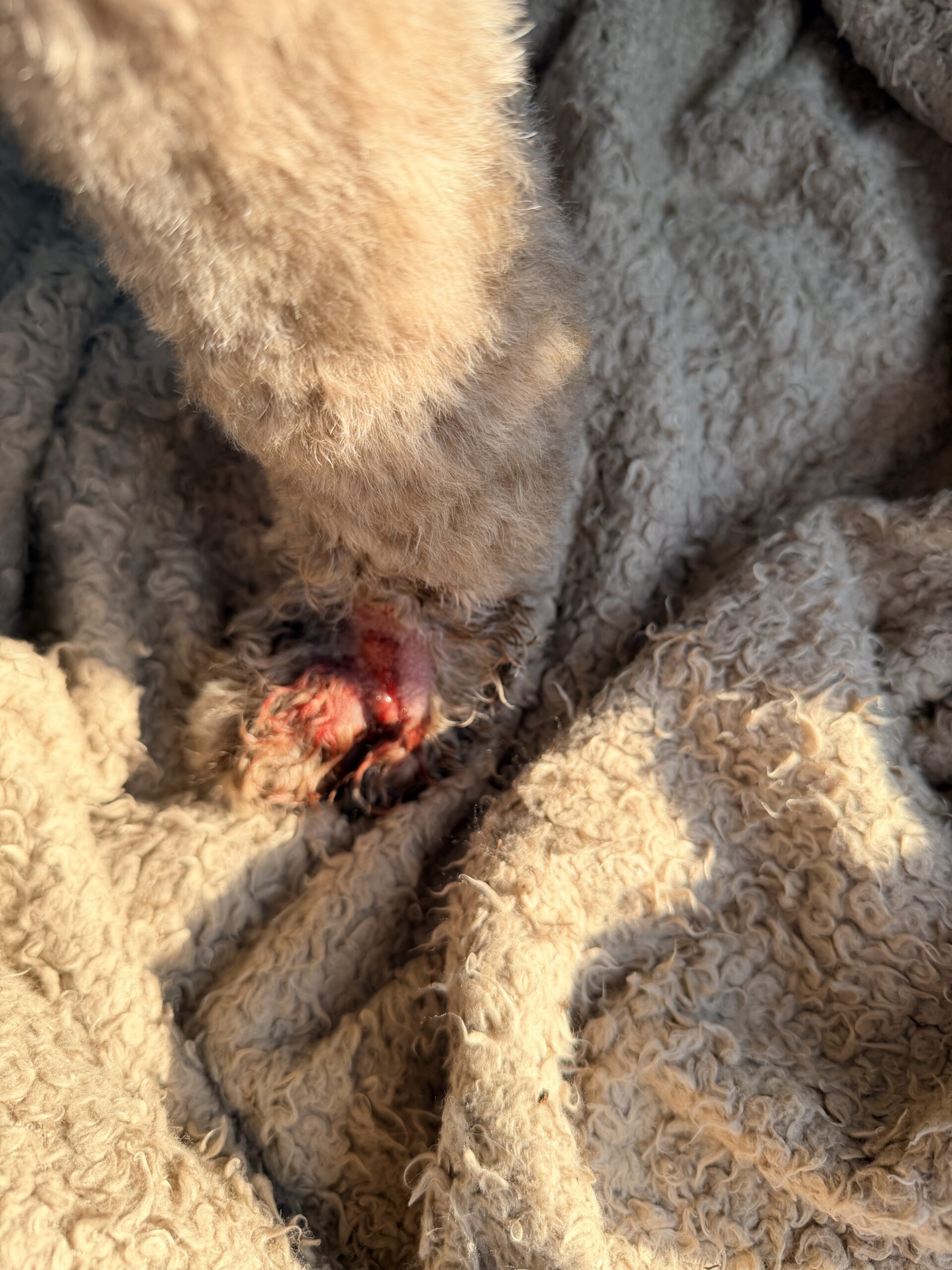
Exhibit A
I also brought home a rather unusual souvenir.
Swanspool had taken the offending grass seed and Sellotaped it to one of their business cards so I could see exactly what had caused all the trouble.
For something capable of putting a 29 kg Standard Poodle into veterinary surgery, it really did not look like much.
I still have the card.
In engineering, a failed component is often kept so it can be examined and understood. In this case, the component was botanical, the machinery was a poodle and the evidence was secured using ordinary office stationery. The principle was much the same.
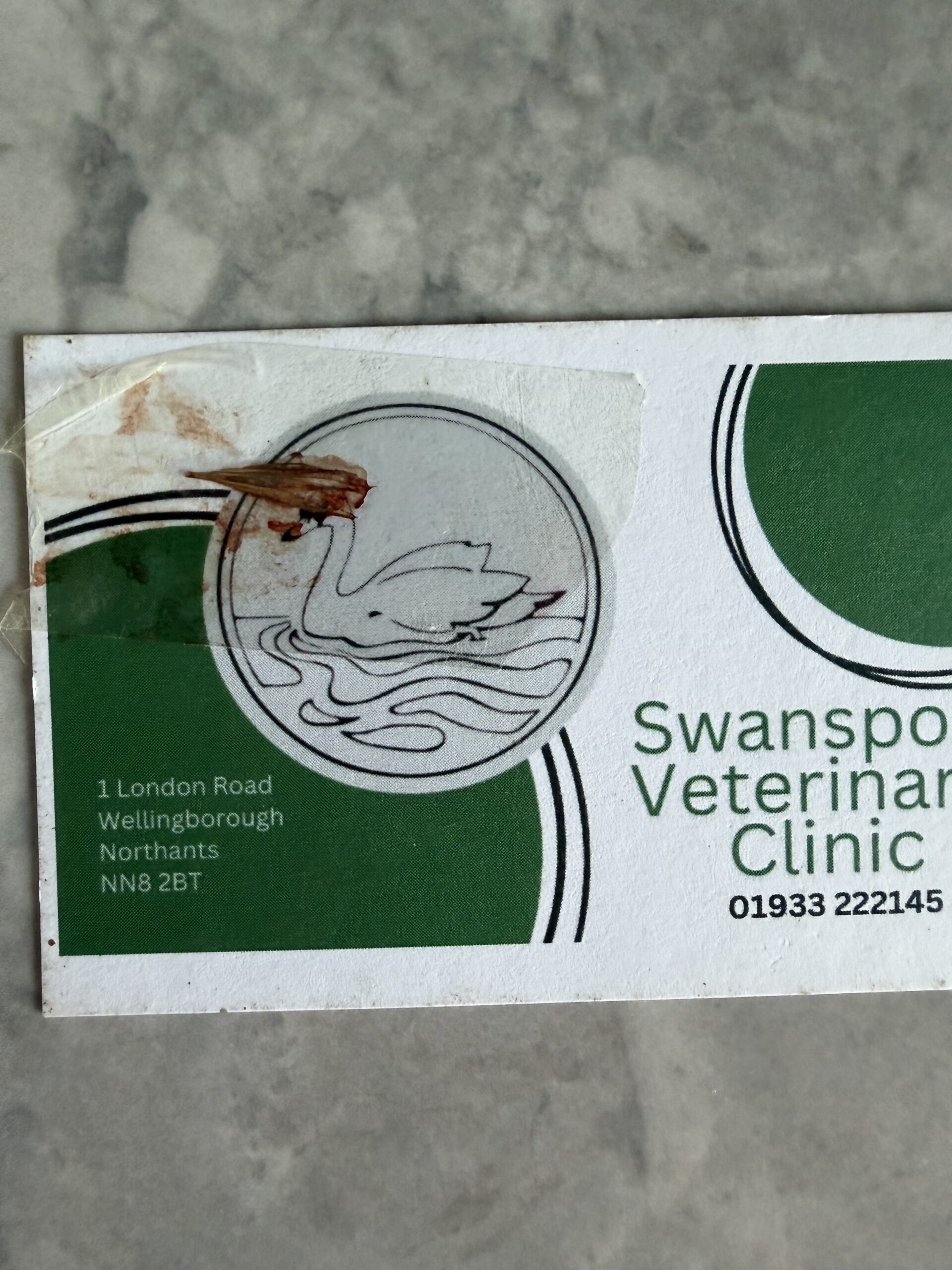
The post-walk inspection routine
I am far more conscious of grass seeds after walks now, particularly in summer when grasses are dry.
That does not mean wrapping Oliver in cotton wool or avoiding every patch of long grass. Dogs still need to be dogs. It simply means adding a quick inspection to the normal maintenance schedule.
For Oliver, I look between and around his toes and paws, then run my hands through his coat. I also pay more attention around his ears, legs, armpits and other areas where something could become caught.
Different locations may produce different clues. Things worth noticing include:
- repeatedly licking one paw;
- limping;
- unexplained redness or swelling;
- repeated head shaking or sudden irritation around one ear;
- persistent sneezing;
- eye irritation; or
- a sore patch of skin with no obvious explanation.
The most important lesson from Oliver is that you may not be able to see the cause.
I could not. Bryony could not see the grass seed either. She simply recognised that Oliver's paw was not normal.
That was enough to start the chain of events that got it found.
Grooming is not only bodywork and polish
Keeping a Standard Poodle's coat under control is a job in itself, but this experience reminded me that a good groomer does more than make a dog look presentable.
A groomer handles areas of your dog that you may not examine closely every week. By becoming familiar with the dog, they may notice a lump, swelling, skin problem or other change before the owner does.
Bryony noticing Oliver's paw is a perfect example.
Had she not mentioned it, I genuinely do not know when I would have spotted it. Considering how far the grass seed had already travelled, I am very grateful that she did.
A proper thank-you
I want to say a proper thank-you to Bryony at Barker & Barnet. She did not simply give Oliver another smart haircut. By knowing him, paying attention and speaking up when something did not look right, she helped catch a hidden problem before it travelled any further.
If you are looking for a caring and knowledgeable dog groomer around Higham Ferrers and Rushden, I am very happy to recommend Bryony and Barker & Barnet.
My thanks also go to Swanspool Veterinary Clinic in Wellingborough. They saw Oliver the same day, took the swelling seriously, found and removed the grass seed, explained what had happened and got him safely home again that evening.
I have used Swanspool for Oliver's care and am equally happy to recommend their independent practice. Between Bryony noticing the warning sign and Swanspool carrying out the repair, the whole chain worked exactly as it should.
It was a good example of preventive inspection followed by competent fault-finding. The only weak point in the system was the owner, who had looked at the paw through several inches of poodle fur and declared it apparently serviceable.
Then came the invoice
Unexpected veterinary treatment also brings an unexpected bill.
By the time Oliver had been examined, sedated, treated and sent home with medication, the episode had cost hundreds of pounds.
I paid Swanspool when Oliver was treated, then submitted a claim through his pet insurance with Napo. Napo covered the accepted costs, less Oliver's policy excess and my 20 per cent contribution.
Under Oliver's policy at the time, once a pet reached nine years old, the owner contributed 20 per cent towards an accepted veterinary-fee claim after the excess had been deducted. That is an important detail to understand in your own policy rather than discovering it while standing at a veterinary reception desk with a dazed poodle.
Insurance did not mean I paid nothing. I still had to pay the clinic first, meet the excess and cover my contribution. However, Napo dealt with the accepted claim and reimbursed me within a few days.
It made a considerable difference.
Why insurance mattered to me
Zeus was not insured.
I can still remember my mum and dad having to borrow money to pay what was, at the time, a very large veterinary and hospital bill for his emergency operation. I was only a teenager, but I remembered it.
With Oliver, there was still an upfront cost, an excess and my contribution, but there was no question of having to borrow money simply because my dog unexpectedly needed treatment.
That alone reminded me why I insure him.
Pet insurance is not particularly exciting when the premium leaves your account every month and nothing happens. Like most insurance, you would prefer never to get your money's worth.
Then an ordinary day starts with a trip to the groomer and ends with your dog being sedated at the veterinary surgery. At that point, the purpose of it becomes rather clearer.
What Oliver taught me
The lesson is not that every dog returning from a walk needs to undergo a full forensic examination under bright workshop lighting.
It is simply to pay attention to small changes.
Oliver's swollen paw did not look dramatic. There was no visible foreign object and he had not presented me with an obvious emergency. Hidden beneath the surface, however, was a grass seed already travelling much further than I would have imagined.
Bryony spotted that something was not right. Swanspool took it seriously and saw him the same day. A few hours later, the problem had been removed.
Oliver came home slightly drunk from the sedation, carrying medication for his paw while I carried the offending article Sellotaped to a business card.
More than forty years earlier, Zeus had taught me how much trouble one tiny grass seed could cause.
Apparently I needed a refresher course.
This time, Oliver provided it.
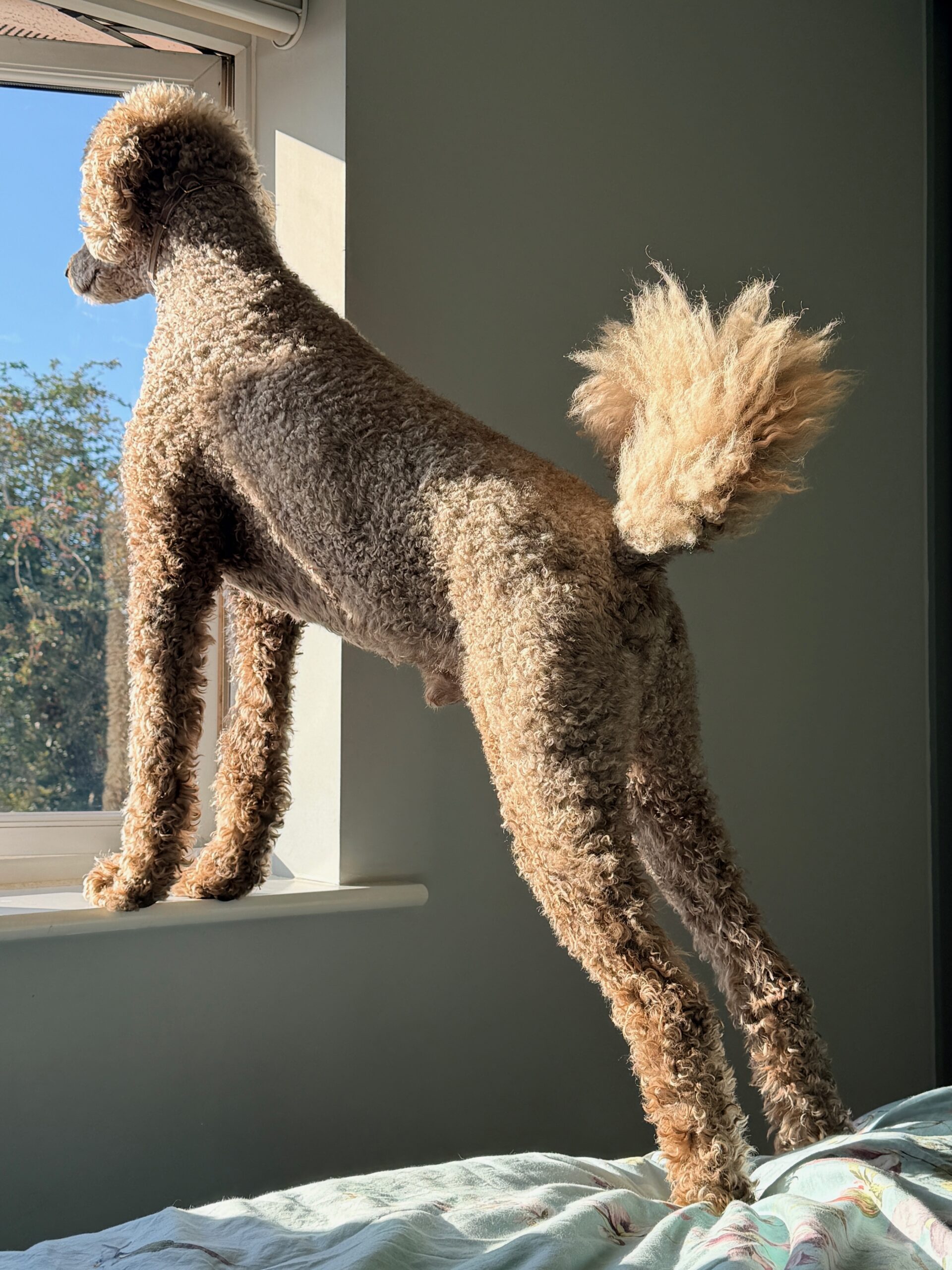
The takeaway
Small warning signs deserve attention. You may not see the cause, but a change in your dog's behaviour, movement, skin or paws is worth taking seriously. A quick check after walks costs nothing, and knowing what is normal for your dog makes it easier to recognise what is not.
Workshop status: Back in service.
Advisory: Inspect paws after long grass.
Evidence retained: One grass seed, Sellotaped to a business card.
This is Oliver's experience and what I learned from it, not veterinary or insurance advice. If your dog has unexplained swelling, pain or irritation, or you suspect that a grass seed has become embedded, contact your own vet. Insurance policies and contribution rules vary, so check the terms of your own cover.
Where next?
The repair may be complete, but Officer Oliver has already left a useful paper trail:
- Previous Oliver story: The Day Oliver Came Home
- More from the household: Meet Oliver and Flo
- More secondary reads: Explore Life Beyond the Workshop