The Garden Table Workshop
Why you don’t need the perfect space to fix things
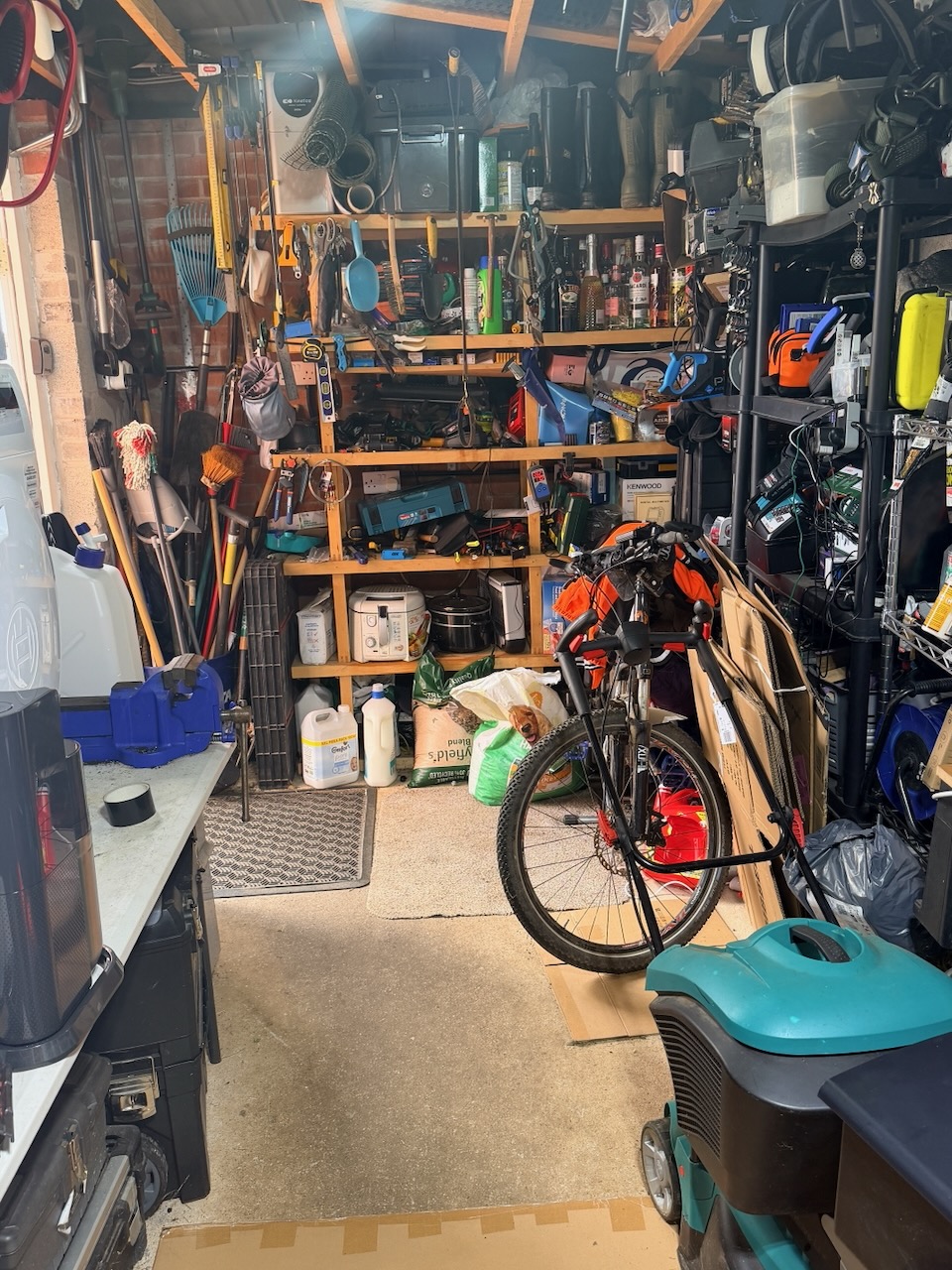
I would love to tell you that every repair begins in a beautifully organised workshop.
A solid bench. Tools arranged neatly on a shadow board. Perfect lighting. Plenty of space. Not a single unidentified box sitting in the corner.
That is not my reality.
My garage contains tools, parts, useful items, possibly useful items and things I have kept because they may become useful at some unspecified point in the future.
What it does not contain is much room to work.
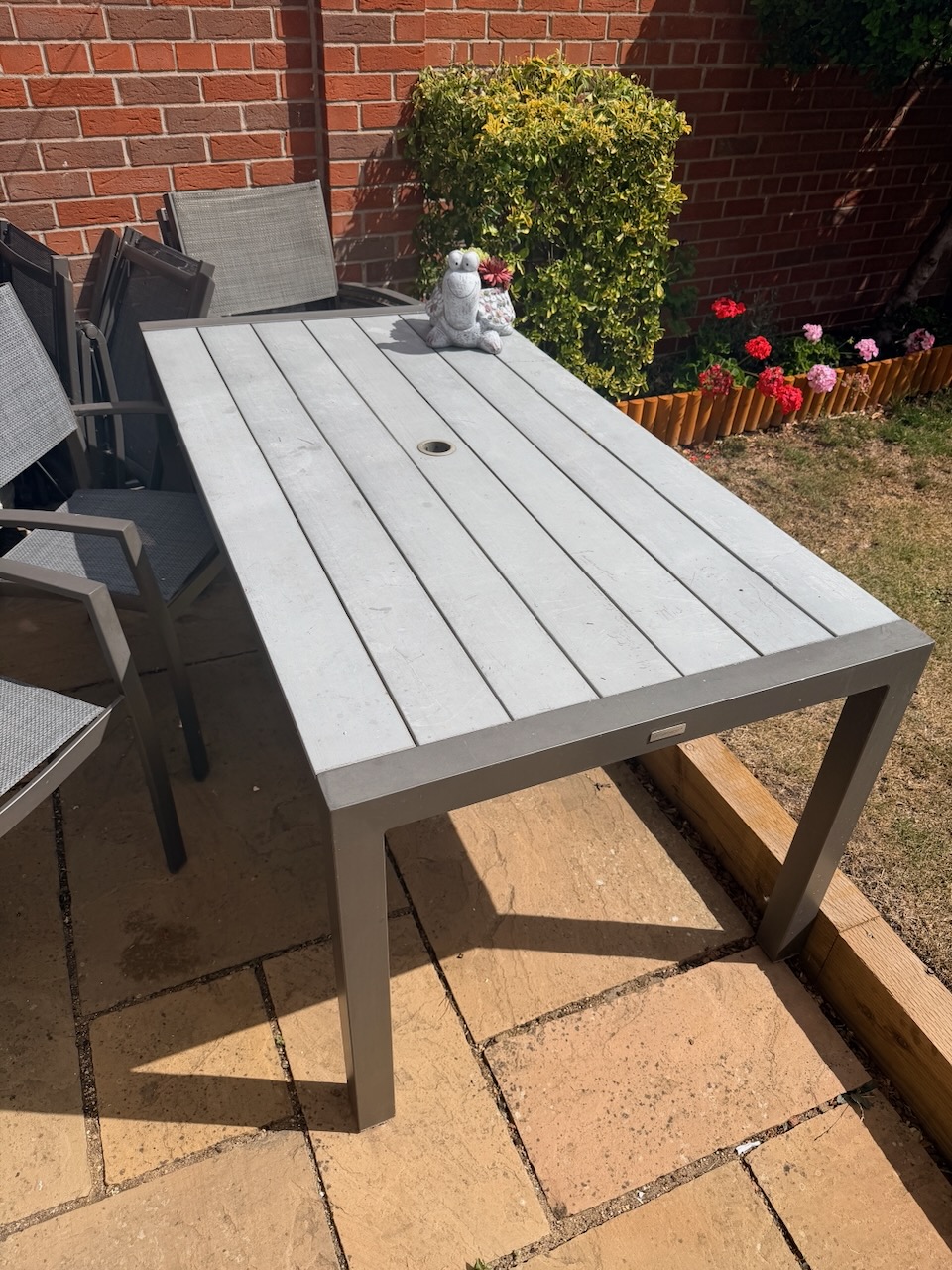
So, like many people, I often carry out repairs on the garden table.
It is not glamorous.
It is not weatherproof.
It does not have a vehicle lift, compressed air or a neatly painted floor.
But it is flat, accessible and usually large enough for the job.
Sometimes that is all you need.
The Workshop You Actually Have
There is a danger in believing you cannot begin until you have the perfect setup.
The ideal workshop becomes another project in itself.
You need more space.
Then better storage.
Then improved lighting.
Then a proper bench.
Then more power sockets.
Then somewhere to put everything you had to move before you could build the bench.
Before long, the repair that started the whole idea has been forgotten, but you now own six storage boxes and a drawing of the workshop you may build one day.
A proper workspace is useful, of course.
Good lighting, safe access and organised tools make jobs easier. But a lack of perfection should not automatically stop you from fixing something.
Most small repairs need far less than we imagine.
A suitable surface.
The correct tools.
Enough light to see what you are doing.
A sensible plan.
And, ideally, weather that does not change its mind halfway through.
Tools With a History
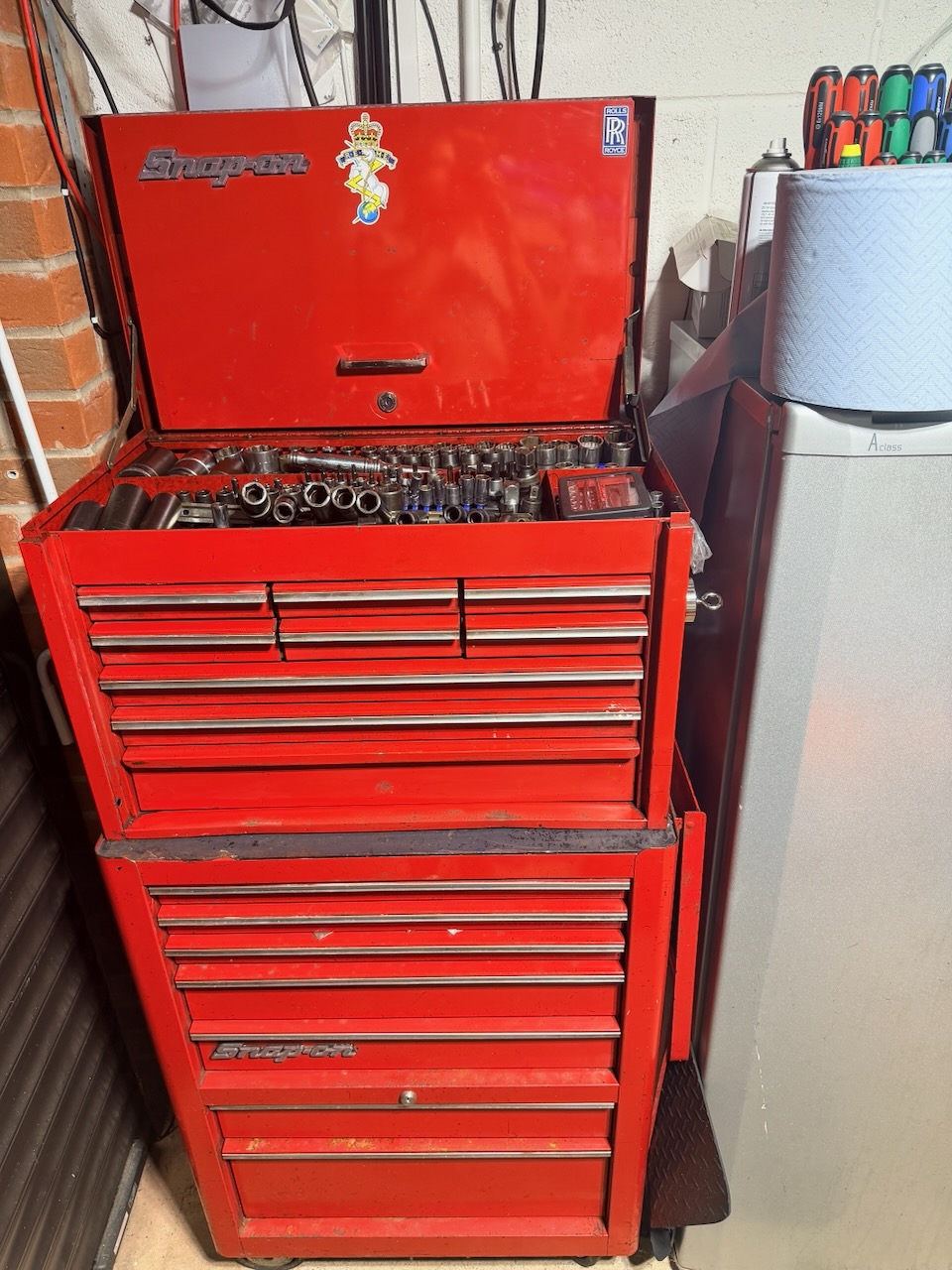
I still have the red Snap-on toolbox and roll cabinet from when I worked as a vehicle mechanic at a Perrys Ford main dealer.
I started as an apprentice in 1986 and gradually built up the collection as I learned the trade and earned enough to buy the next tool I needed.
Some of those tools have stayed with me for decades.
A few have disappeared along the way.
Some may have been borrowed and never returned. Others have probably joined the same secret society as all the missing 10mm sockets.
The cabinet carries marks from years of use. It has scratches, worn areas and evidence of a working life.
I do not see that as damage.
It is part of its history.
The toolbox is not simply somewhere to store spanners and sockets. It represents where I started, the skills I learnt and the countless jobs those tools have helped complete.
A spotless replacement might look smarter.
It would not tell the same story.
Why the Garden Table Works
The garden table has several unexpected advantages.
It is usually at a comfortable height.
There is natural light.
There is room to lay out parts.
If something is dirty, oily or covered in years of accumulated grime, it is already outside.
You can also step back and look at the whole job without falling over whatever has been stored behind you since 2018.
The greatest advantage, however, is that the garden table is available.
That matters more than having the perfect bench you cannot reach because three garden chairs, a pressure washer and a box marked “miscellaneous cables” are standing in front of it.
The garden table has hosted tools, electrical items, garden equipment, household repairs and objects whose designers clearly never expected anybody to take them apart.
It has also hosted cups of tea, which usually need moving before work begins.
I do own two or three collapsible workbenches, so the garden table is not my only option.
The problem is that the garden table is usually already there, already open and ready to use. The collapsible benches require finding them, moving whatever is standing in front of them and remembering how the legs unfold without trapping a finger.
Convenience generally wins.
And when the weather is cold or wet, I should probably admit that the dining room table has occasionally been pressed into service for smaller jobs.
Please do not tell anyone.
A suitable working surface is a suitable working surface, although it is wise to remove all evidence before dinner.
The Pasting-Table Workbench
My home setup is rather less glamorous.
I have a useful vice squeezed onto the edge of a pasting table, which also shares space with bird seed, an overflow fridge and a tumble drier.
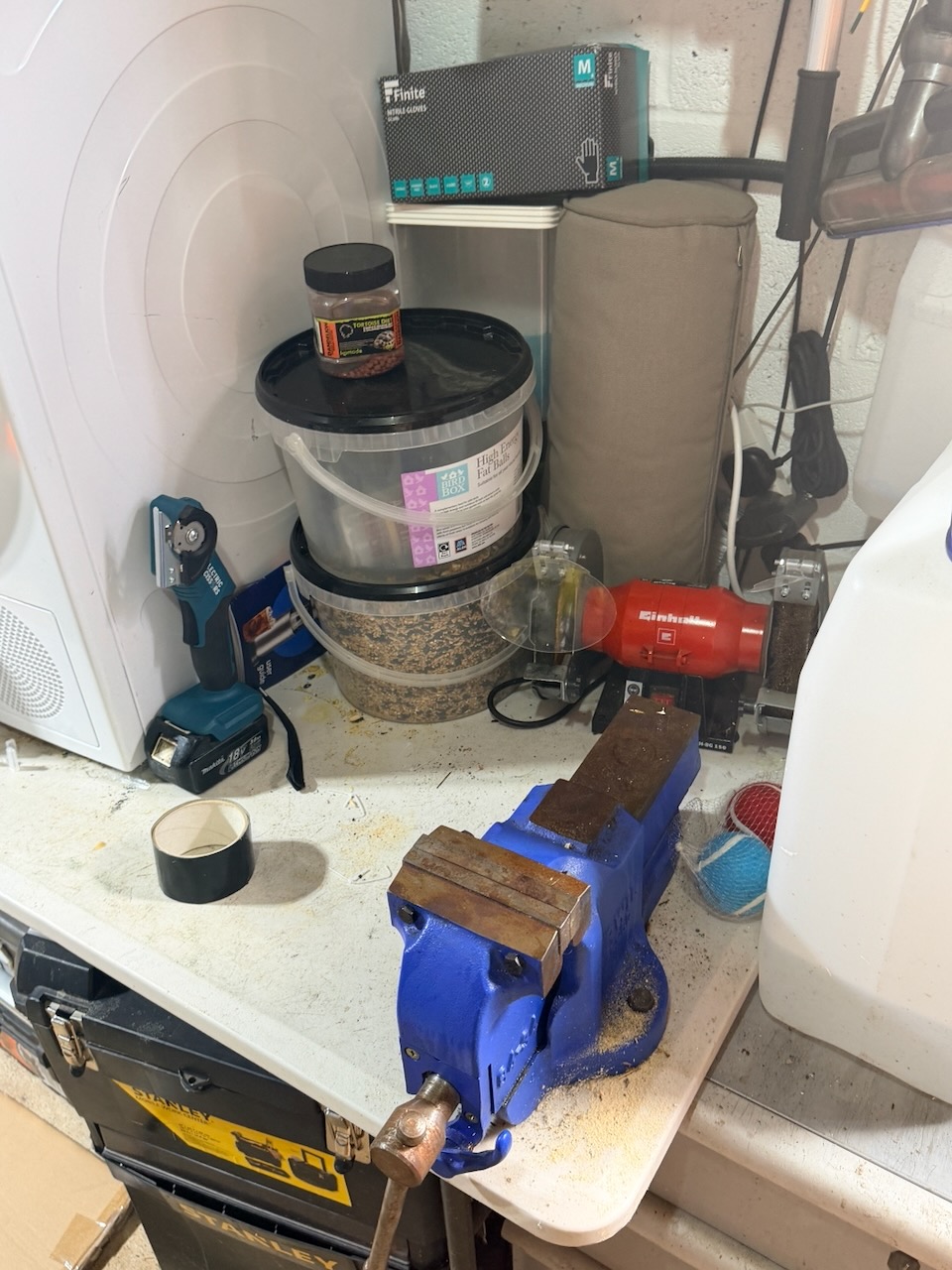
It may not feature in many workshop catalogues, but it works.
The important part is not how impressive the bench looks. It is whether the vice is secure, the job is stable and the setup is suitable for the work.
That is the difference between making do sensibly and improvising carelessly.
A temporary arrangement can still be safe and effective when it has been thought through properly.
Setting Up Properly
Working on a garden table does not mean throwing a toolbox outside and hoping for the best.
A little preparation makes a large difference.
I clear the surface properly, protect it if the job may be dirty or sharp and make sure the item being repaired is stable.
Small parts need somewhere sensible to go.
A tray, container or magnetic dish can prevent an important screw from disappearing between the paving stones.
That lesson is usually learnt immediately after watching an important screw disappear between the paving stones.
Tools should be laid out where they can be seen rather than stacked in a pile. This reduces the time spent searching for something that is already on the table.
Unless it is a 10mm socket.
Normal rules do not appear to apply to those.
If electricity, fuel, sharp edges, springs or stored pressure are involved, the job needs more thought before anything is dismantled.
The setting may be informal, but the work still deserves proper care.
There is no prize for completing a repair quickly if the method was unsafe.
The Weather Department
Outdoor repairs introduce another member of the team.
The British weather.
It is not a reliable colleague.
A morning that begins with clear skies can produce rain at exactly the moment a component has been dismantled into seventeen pieces.
Wind adds its own complications.
Instructions blow away.
Packaging travels across the garden.
Small washers develop remarkable aerodynamic ability.
Direct sunshine can be awkward too. Metal becomes hot, screens become difficult to read and tools left in the sun suddenly become uncomfortable to hold.
The answer is not complicated.
Check the forecast.
Keep a cover nearby.
Avoid opening something delicate when rain is clearly approaching.
Know when to stop and pack away.
This last point matters.
Optimism is useful in repair work, but it should not be confused with waterproofing.
Working Around Real Life
A home repair space is rarely isolated from everything else.
There may be pets, people, garden furniture, washing on the line and somebody wondering why the table is covered in parts when they were planning to eat outside.
Oliver naturally assumes that any activity in the garden may involve him.
His preferred contribution is usually to arrive carrying a tennis ball and stand close enough to make his priorities clear.
This is not always helpful.
Flo takes a more measured interest. She may come over to investigate, particularly if there is any possibility that dandelions are involved.
Neither is allowed near anything unsafe, sharp, hot or oily.
A home workspace has to fit around ordinary life. That means keeping the area controlled and not leaving tools or parts unattended.
It also means accepting that a repair may need to pause.
There is nothing wrong with that.
A job completed in two careful sessions is better than one rushed because the light is fading or rain has started landing on the instructions.
Organisation Without Perfection
I admire perfectly organised workshops.
Everything has a place.
Every drawer is labelled.
Tools return to the same position after use.
I understand the theory.
In practice, my system is more evolutionary.
Frequently used tools tend to remain accessible.
Special tools are stored somewhere sensible that I will later struggle to remember.
Parts are sometimes placed in a safe location so safe that they effectively disappear.
The answer is not to wait until every tool is perfectly organised.
The answer is to improve the system gradually.
A better toolbox.
A labelled container.
A dedicated tray for small parts.
A habit of putting tools away at the end of the job.
These small improvements matter because they make the next repair easier.
Organisation should support the work, not become a reason to avoid starting it.
The Value of Making Do
There is satisfaction in solving a problem with the space and tools available.
That does not mean improvising recklessly or using the wrong equipment.
It means understanding what the job genuinely requires.
A small repair does not always need an industrial workshop.
It may need a screwdriver, a pair of pliers, a clean surface and twenty quiet minutes.
The internet can sometimes make practical work look more complicated than it is.
Videos are filmed in spotless workshops.
Tools appear in perfectly arranged drawers.
Every component is clean.
Nothing rolls off the bench.
Nobody spends ten minutes looking for the screw they removed thirty seconds earlier.
Real repairs are often less polished.
They happen on kitchen floors, driveways, garden tables and wherever enough room can be found.
That does not make them less worthwhile.
Knowing When the Table Is Not Enough
The garden table has limits.
Some jobs are too heavy, dangerous, dirty or complicated for an improvised home setup.
There is no shame in recognising that.
Good judgement is part of practical ability.
Knowing how to repair something matters.
Knowing when not to attempt it matters just as much.
A job involving specialist equipment, significant stored energy, complex electrical work or anything beyond your knowledge should be assessed honestly.
Sometimes the correct tool is professional help.
That is not failure.
It is simply another way of getting the answer right.
A Workshop Is More Than a Room
I used to think of a workshop mainly as a physical place.
Now I think it is also a way of approaching a problem.
You look carefully.
You work out what has failed.
You gather what you need.
You take things apart methodically.
You learn as you go.
You try not to lose anything important.
The location matters less than the mindset.
A well-equipped workshop is a wonderful thing.
But curiosity, care and a willingness to learn can travel.
They fit in a toolbox.
They can be carried into the garden.
They can begin on an ordinary table.
One Last Thing…
Do not wait for the perfect workshop before fixing something.
Start with the space you have.
Clear the table.
Find the right tools.
Check the weather.
And keep an eye on the 10mm socket.