Concorde: More Than a Museum Piece
Concorde has always meant rather more to me than an extraordinary aircraft. Both of my brothers were aircraft engineers with British Airways at Heathrow, and both worked on Concorde during their careers. They have sadly both passed away, but that connection means I have never looked at Concorde as merely a museum exhibit.
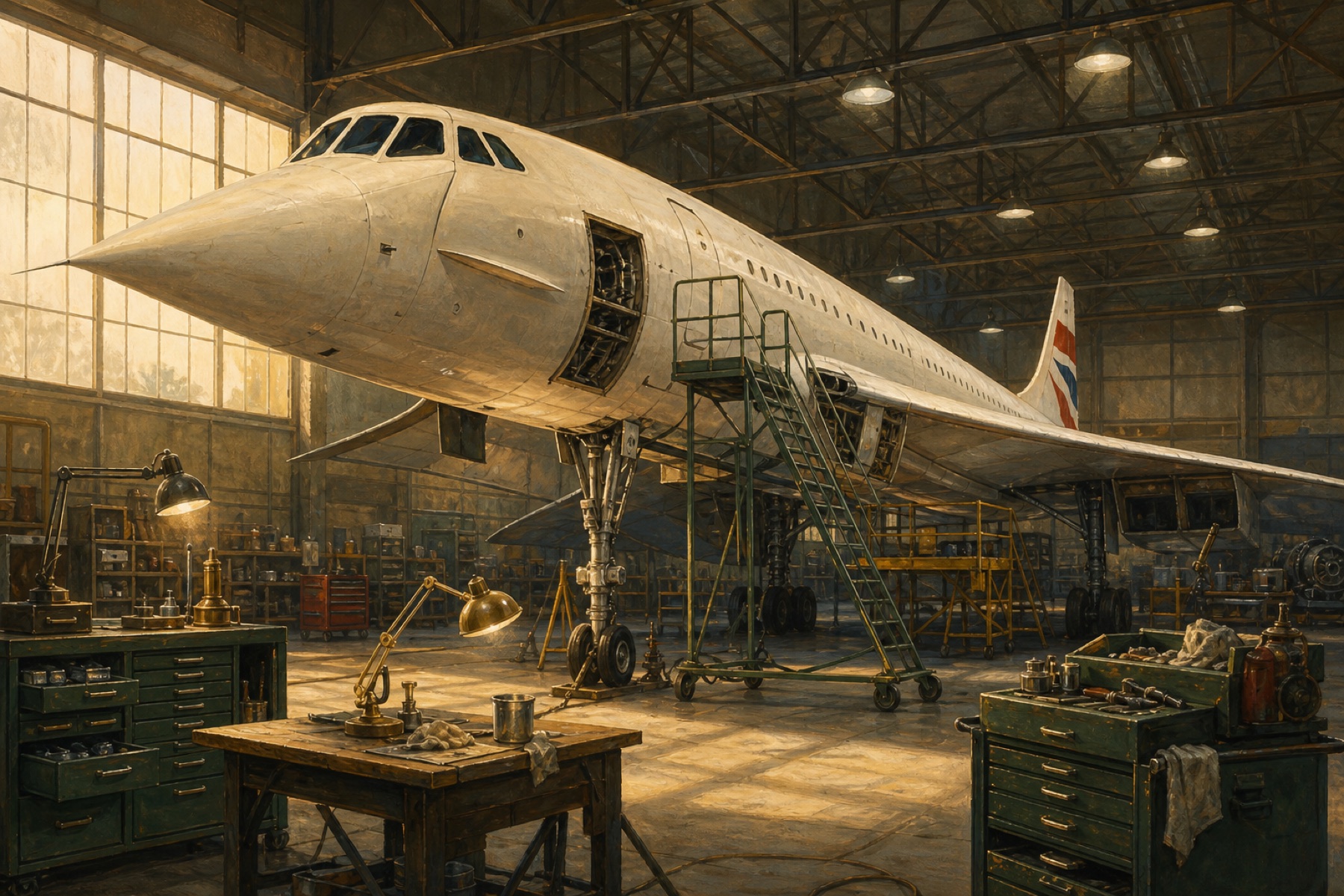
Behind every flight were skilled people responsible for keeping an exceptionally complicated machine safe and serviceable. The pilots may have been the people passengers saw, but the aircraft only left the ground because engineers, technicians and support teams had done their work properly.
More than speed
Concorde is often reduced to a collection of remarkable numbers. It could carry 100 passengers at more than twice the speed of sound, cruise at up to 60,000 feet and cross the Atlantic in a time that still feels improbable.
Those figures deserve admiration, but they are not the whole achievement. Speed created heat, stress and demands that a conventional airliner did not face in the same way. Every elegant line on the outside was supported by inspection, maintenance, testing, documentation and human judgement behind the scenes.
Delta Golf
The Concorde at Brooklands Museum is G-BBDG, known as Delta Golf. It was the first British production Concorde and completed much of the certification work required before the type entered airline service.
Brooklands records that the aircraft flew 663 times between February 1974 and December 1981, with 374 of those flights at supersonic speed. It travelled around the world for route testing and sales demonstrations, but it never carried fare-paying passengers in commercial service.
After its flying life ended, British Airways acquired Delta Golf in 1984 and used it as a source of spare parts for the operational fleet. That may sound unglamorous, but keeping other aircraft serviceable is useful work. Sometimes the most valuable contribution a machine makes comes after its own working life has ended.
Bringing Concorde home
British Airways offered G-BBDG to Brooklands Museum in 2003. The aircraft had to be dismantled into major sections, transported from Filton and put back together at Brooklands. Major sections arrived in June 2004 and a restoration programme followed before Delta Golf opened to the public in July 2006.
Brooklands is an appropriate home. The first British and French industry meeting that led to Concorde took place there, and almost a third of every Concorde airframe was manufactured at the site before final assembly elsewhere.
The restoration did not return Delta Golf to flight, nor was that the aim. It preserved the aircraft so that people could understand its scale, design and importance. That is a different kind of engineering job, with its own decisions about originality, safety, access and long-term care.
Preserving knowledge as well as metal
A museum can preserve an object, but the knowledge that kept it working is harder to hold on to. Skills live in people. They are passed through training, experience, questions, mistakes and the quiet advice that one engineer gives another.
That is why Concorde should be remembered as more than a beautiful airframe or a glamorous passenger cabin. It represents thousands of people who designed components, assembled structures, investigated faults, signed off work and took responsibility for the safety of others.
Why it matters to me
My brothers’ connection to Concorde is personal, but I do not want to turn their working lives into a sentimental footnote. The better tribute is to recognise the standard of the work and the responsibility carried by everyone who kept the aircraft flying.
Delta Golf will not fly again, but it still has useful work to do. It can remind visitors that remarkable machines do not remain remarkable by themselves. They depend on skilled people, patient maintenance and knowledge worth preserving.